
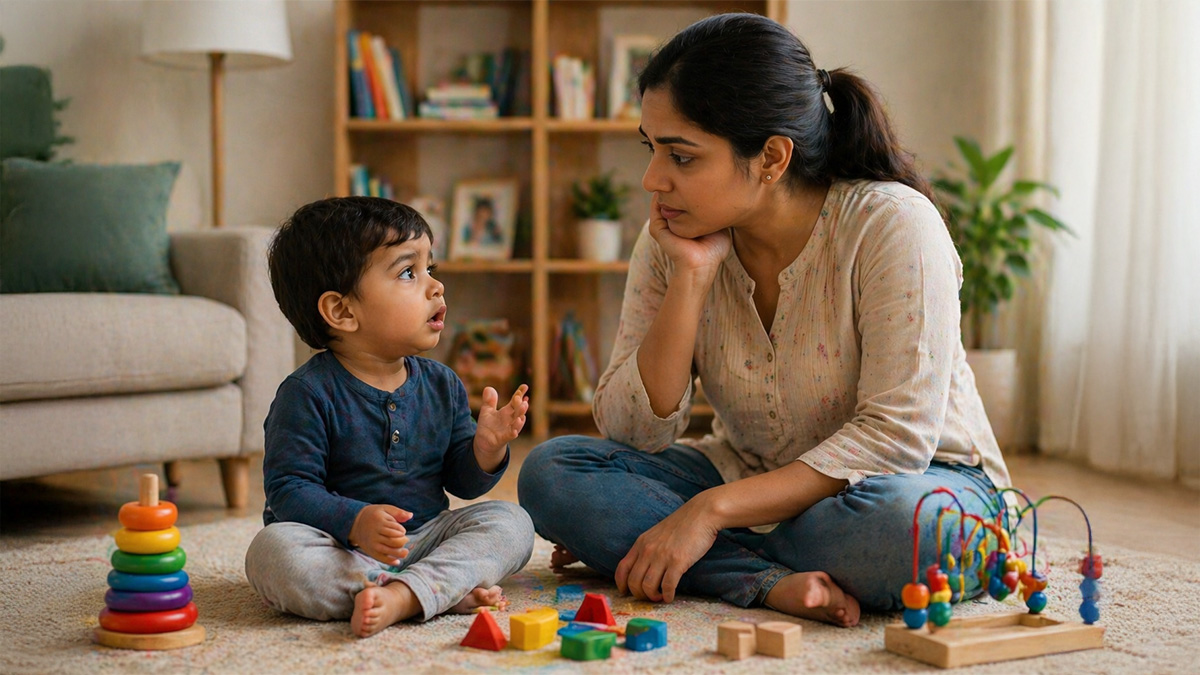
While some children talk very early on, others may take longer. The foremost question on parents’ minds is how long it is okay to wait before they should be concerned about their child’s speech development and seek professional guidance.
To answer this, it is important to understand speech development milestones in children and what you can do if you notice early signs of speech or language delay.
Toddlers and Communication Milestones: Early Signs of Speech Delay in Toddlers
Even though some children take longer to talk, waiting too long may mean missing the window when early intervention is most effective. If you notice the following signs of speech delay, reaching out to a professional early can make a real difference.
Between 6 months and 2 years
- Not babbling or making repetitive sounds (like ‘ba-ba’ or ‘da-da’) by 6 to 9 months
- Not saying any simple words like ‘mama’ or ‘papa’ by 12 months, or not using at least 6–10 meaningful words by 18 months
- No eye contact or very minimal eye contact
- Does not seem to understand simple words like ‘no’ or ‘come here’ by 12 months
- Limited or no hand gestures, like waving or pointing
- Does not imitate sounds or actions
Between 2 and 4 years
- Has not started combining simple words into short phrases (like ‘want milk’ or ‘go park’) by age 2
- Very limited vocabulary by the time they are 3 years old
- Speech that is unclear to people outside the family
- Avoids interaction and play with other children
- Shows signs of frustration when others are unable to understand them
Causes of Speech Delay in Toddlers
Understanding what might be contributing to your child’s speech delay helps your therapist create a more targeted plan. A thorough assessment by an experienced speech therapist can identify the specific factors at play and guide the right approach for your child.
Some possible causes of speech delay in children include:
- Hearing difficulties (even mild or temporary ones, such as from frequent ear infections)
- Neurological conditions
- Developmental disorders such as autism spectrum disorder
- Premature birth
- Difficulties with mouth and tongue movements needed for speech (oral motor challenges)
- Nutritional factors
- Excessive screen time, particularly passive screen exposure
- Limited opportunities for social interaction
Every child’s situation is different. A thorough clinical assessment helps identify which of these factors, if any, is relevant to your child — so you can focus on what actually matters rather than worrying about everything on this list.
Seek Professional Support if You Notice Speech Delay Symptoms
If you notice any of the signs described above, seeking professional guidance early is the most helpful thing you can do. Ananya Child Development Centre in Hyderabad has a team of qualified and experienced therapists who provide expert assessment and compassionate, evidence-based care for children with speech and language delays.
Depending on the assessment findings, your child’s speech therapist will use play-based activities, scientifically supported interaction techniques, and targeted exercises to build vocabulary, strengthen oral muscles, enhance language understanding, and improve communication skills.
What You Can Do at Home to Support Your Child’s Speech Development
Apart from scheduled therapy sessions, supporting your child’s language development at home makes a significant difference. Here are some things you can do:
- Talk to your child throughout the day. Narrate what you are doing — even something as simple as “I’m pouring water into your cup.” This helps them connect words with everyday actions.
- Read aloud to your child regularly. This expands their vocabulary and strengthens their listening and comprehension skills.
- Sing songs and nursery rhymes together. The rhythm and repetition help with language learning.
- Comment rather than question. Instead of testing your child (“What’s this? What colour is it?”), try narrating and modelling language (“That’s a red ball! You’re rolling the ball.”). This reduces pressure and gives your child more language to absorb.
- Encourage them to imitate sounds and words, but without forcing them.
- Label objects and actions as you go about your day.
- Limit passive screen time and prioritise face-to-face, back-and-forth conversations.
- Encourage playtime with other children, both indoors and outdoors.
Ananya Child Development Centre: Expert Care for Your Child’s Communication Journey
At Ananya Child Development Centre, one of Hyderabad’s leading centres for paediatric speech and language therapy, we work with your family to understand your child’s unique communication profile and create a plan that fits. Our multidisciplinary team — including speech therapists, occupational therapists, psychologists, and early interventionists — ensures your child receives comprehensive, coordinated support.
Schedule your appointment with us today for an expert-led assessment and a personalised therapy plan for your child.
Frequently Asked Questions
When should I be concerned about my toddler’s speech delay?
If your child is not babbling by 6 to 9 months, not using any simple words by 12 months, or not combining words into short phrases by age 2, it is a good idea to consult a paediatric speech therapist. Early assessment does not mean something is definitely wrong — it means you are giving your child the best chance of getting support if they need it.
What causes speech delay in toddlers?
There can be several contributing factors, including hearing difficulties, neurological conditions, developmental disorders, excessive screen time, or limited social interaction. A professional assessment can help identify the specific cause and guide the right approach for your child.
What should I do if I suspect a speech delay?
Visit a speech therapist at the earliest opportunity. Timely assessment and intervention can significantly improve your child’s communication skills. The earlier support begins, the more effective it tends to be.