
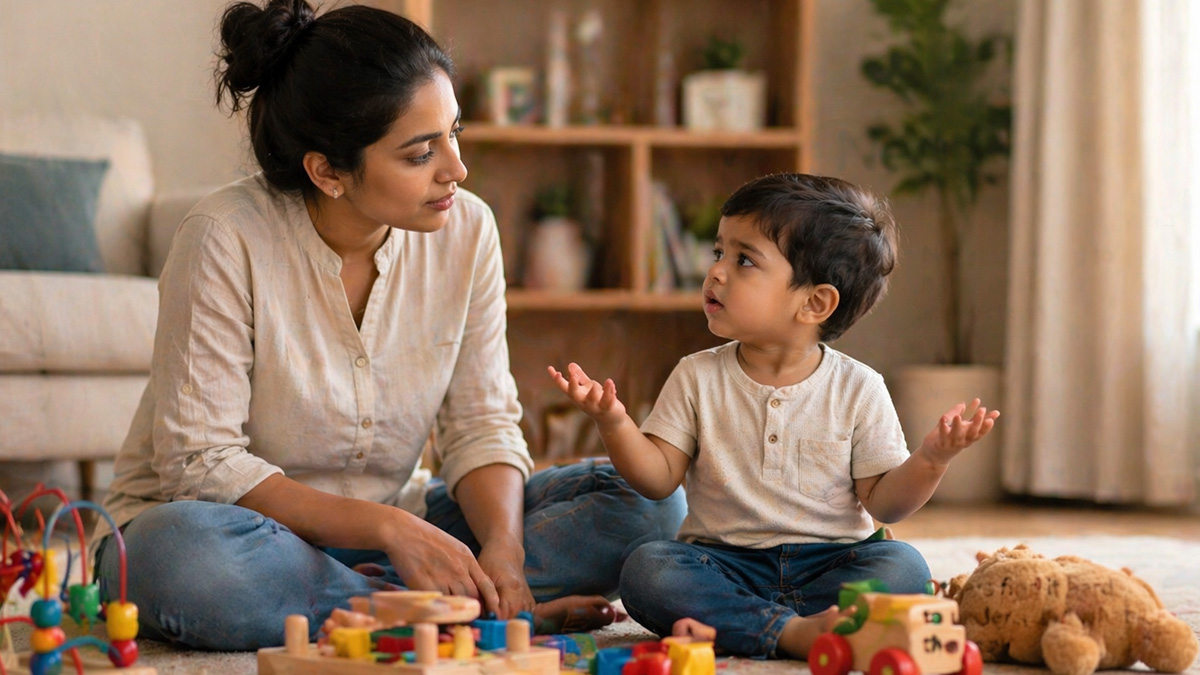
Hearing your child’s first words can be a thrilling moment for parents. However, like all milestones, the age at which your child communicates can vary. While some children may say their first word at an early age, others may take longer than their peers. Understanding speech development in children can help parents identify speech delay symptoms early and take the first step towards professional speech therapy in Hyderabad.
Speech Development Milestones by Age
When it comes to communicating, toddlers typically start to babble and make sounds by 6 months, while the first intentional words are spoken around 10 to 14 months. By 2 years, most toddlers can communicate with two-word sentences. Between 2 and 3 years, the child’s vocabulary expands, and they begin to combine words to make complete sentences, becoming easier to understand for both family members and people outside the home.
However, like all other milestones, speech and communication delays are not uncommon. Knowing when your child might benefit from a paediatric speech therapist’s support is important for timely intervention and healthy communication development.
When to Take Your Child to a Speech Therapy Centre for Professional Support
So, what are the early speech delay symptoms in children, and when should parents seek a professional assessment?
Limited Communication
By 12 to 18 months, children are already babbling and using hand gestures to communicate. If, by this age, your child is not responding to their name, is unable to use gestures like pointing or waving, and is not babbling or making sounds, this is a sign that a professional assessment would be worthwhile.
Restricted Vocabulary
One of the first signs of speech delay in children is limited or restricted vocabulary. Between 2 and 3 years, children generally build up a range of words and begin combining two or more words into short phrases. If these short phrases are absent by age 2 to 2.5, this is a good time to seek a professional assessment.
Unclear Speech
By 3 to 4 years, most children can pronounce common words clearly enough to be understood by people outside the family. If your child’s speech remains difficult for others to understand at this age, it may indicate a speech delay that would benefit from professional support.
Preferring Solitary Play
Children generally enjoy group play, and it plays an important role in language, speech, and communication development. While some children naturally prefer quieter play, a consistent pattern of avoiding group interaction — particularly when combined with limited verbal communication — may warrant a professional evaluation.
This avoidance can sometimes arise from frustration with communicating, or from finding it harder to engage with peers verbally. A speech therapist can help determine whether support would be helpful.
Schedule an appointment at Ananya Child Development Centre in Hyderabad for an accurate assessment and prompt therapeutic support.
Trouble Following Simple Instructions
Another early sign of speech or language difficulties is trouble following simple instructions or commands, such as “give me the ball” or “come here.” This can indicate language comprehension challenges that benefit from early assessment.
Phonetic Errors
As toddlers start communicating, mispronunciation of words is common and expected. However, phonetic errors that persist beyond the typical age can signal a speech difficulty that may require targeted support.
For example, most children can clearly produce sounds like ‘p,’ ‘b,’ and ‘m’ by age 3, while sounds like ‘r,’ ‘l,’ and ‘th’ may take until age 6 or 7. If your child is consistently struggling with sounds that are expected for their age, a speech therapist can assess whether targeted support would be beneficial.
What Happens During a First Assessment?
Many parents feel unsure about what to expect from a first visit to a speech therapist, and that uncertainty can sometimes delay the decision to book. At Ananya Child Development Centre, a first assessment is a relaxed, play-based session. The therapist observes how your child communicates, interacts, and responds, and speaks with you about your child’s developmental history and your concerns. There is no pressure and no judgement — the goal is simply to understand where your child is and whether they would benefit from support.
Ananya Child Development Centre, Hyderabad: Expert Support for Your Child’s Communication Journey
If you notice the first signs of a speech or language delay in your child, schedule an appointment at Ananya Child Development Centre for compassionate, evidence-based care. Our multidisciplinary team — including speech therapists, occupational therapists, psychologists, and early interventionists — ensures your child receives personalised therapy, early intervention, and coordinated support across all areas of development.
Book a consultation with Ananya Child Development Centre today and give your child the support they need to build strong communication skills early.
Frequently Asked Questions
What are the early indicators that a child needs speech therapy?
Some of the early signs include unclear speech, limited communication or babbling, restricted vocabulary, difficulty understanding simple instructions, consistent avoidance of group play, and phonetic errors that persist beyond the expected age.
At what age should my child’s speech delay concern me?
Toddlers typically start babbling by 6 months and use intentional words around 10 to 14 months. By 2 years, most children can communicate with two-word sentences. If your child is significantly behind these milestones, seeking a professional assessment early gives them the best chance of benefiting from intervention. Research consistently shows that early support — ideally before age 3 — leads to the strongest outcomes.
Can speech delays be treated effectively?
Yes. With professional support from an experienced speech therapist, children can make significant progress in their communication skills. The key factor is timing — the earlier intervention begins, the more effective it tends to be. Many children who receive early, consistent therapy go on to communicate confidently and effectively.